Medieval bread recipe
There was quite a wide range of bread eaten in medieval times. It was the main staple food in the diet of people both rich and poor. However, it is hard to find a 100% definitive recipe that has been passed down directly from that period.
History sources such as Chaucer’s “Canterbury Tales” act as some of our best guides and references on medieval food. Chaucer’s miller, for example, made reference to a variety of bread names and how they were eaten.If we could go back in time and witness some of the popular medieval bread recipes, we would notice some key things:
 1. Ale-barm was used for raising the dough; its equivalent today would be brown ale + fresh yeast.
2. Wheat flour was used to bake bread for the rich as they preferred the finest, whitest bread
3. Honey was often used when making bread with wheat flour
4. Rye bread was the common bread baked by medieval peasants
Medieval Baker At The Oven
The Medieval Baker
The most popular way of baking bread was done by the poor. Peasants would take their usually meagre amount of grain and grind it by hand in a wooden mortar or a stone trough. They would then mix it with water and bake what was known as unleavened bread (or oatcakes).
The baking was done by placing the dough under an upturned pot placed on the ‘down-hearth’ – this was the flat stone in the centre of the floor of their one room hut on which the fire was built. The embers would keep the stone hot for some time so it was ideal for baking in this way.
In some towns and village the bakers would bake bread to supply the local people as well as baking for their own families. A medieval baker’s oven was usually housed in a dedicated building and often outside a town or city’s walls because of the risk of fire. The rich and powerful who had their own lands and often a medieval castle, had ovens housed in buildings within the castle walls.
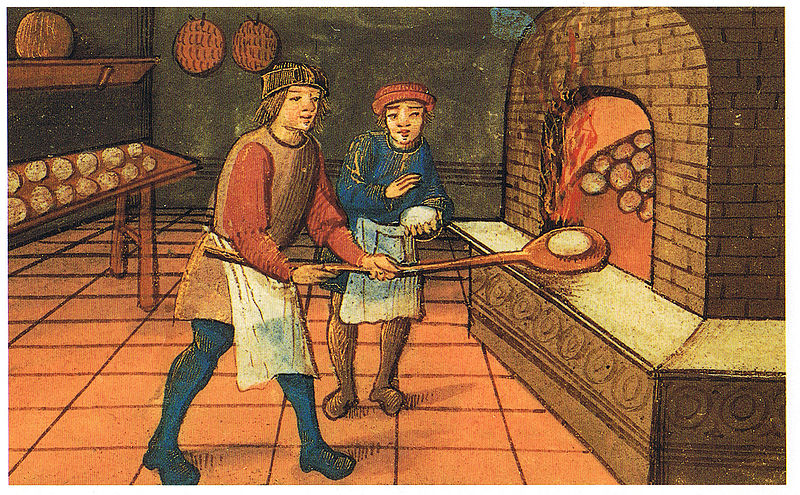
If a baker had a good reputation, they might find themselves baking in a medieval castle kitchen exclusively for a rich noble, his family, guests and servants. The image (right) gives an idea of how a baker might have been seen working in a castle kitchen. Notice the method being used to remove the baked bread from the hot oven – a long stick with a flat round end. Made of clay or wood this was called a peel. Peels are still used today, although they tend to be made of metal. The most common place to see them is in pizza parlours for removing freshly cooked pizzas from the oven.
Assize of Bread & Ale 1267
It may be surprising to some to discover that by the mid 13th century ingredients for baking bread and the actual size of loaves that could be baked was regulated. The Assize of Bread and Ale came into force in 1267 by order of King Henry III of England. Both medieval bakers and brewers were obliged to fees varying in scale in order to do their work and often had to face inspections of weights and measures by order of this Assize. An early instance of ‘Quality Control’ in the commercial food and beverage industry!
The profession of being a baker gained respect and recognition by virtue of this and by the mid 15th century (first charter dated 1486) the Worshipful Company of Bakers was formed. Today it is still in existence although mainly for the purpose of charitable and ceremonial purposes.
Bread in medieval times is a fascinating subject and there is further information on my medieval bread page.
Oatcakes recipe
If you enjoy baking and have yet to try making anything with an old fashioned recipe, you could consider baking a medieval style bread using today’s ingredients.
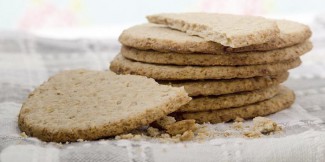
I have a recipe for medieval style oatcakes (photo) and one for barley bread.
These recipes should help you, your friends and family to enjoy a taste of a bygone age.